Mera Peak Climbing in Nepal: Complete Guide for Beginners (2026/2027)
Mera Peak Climbing in Nepal: The Ultimate Beginner’s Guide
If you’re dreaming of standing above 6,000 meters in the Himalayas, watching Everest, Lhotse, Makalu, Cho Oyu, and Kanchenjunga rise around you, Mera Peak Climbing is one of the best adventures you can choose.
At 6,461 meters (21,197 ft), Mera Peak is the highest trekking peak in Nepal. Unlike highly technical alpine climbs, Mera Peak is often considered the most accessible 6,000-meter peak for beginners who have good fitness and proper acclimatization.
In this guide, our local team at Himalayan Immersion Treks shares everything you need to know before booking your climb—from difficulty and training to permits, cost, itinerary, and summit strategy.
Why Choose Mera Peak Climbing?
Many trekkers ask us: “Should I climb Mera Peak, Island Peak, or Lobuche Peak?”
For first-time climbers, Mera Peak is often the strongest choice because it offers:
Less technical climbing than Island Peak
A higher summit than Island Peak and Lobuche East
Long glacier walking with basic mountaineering skills
Excellent acclimatization opportunities
One of the best mountain panoramas in the world
Why climbers love Mera Peak
Highest trekking peak (6,461 m summit)
Beginner-friendly (Less technical than Island Peak)
World-class views (Everest, Lhotse, Makalu, Cho Oyu and Kangchenjunga)
Safer acclimatization (Gradual ascent profile)
Where Is Mera Peak Located?
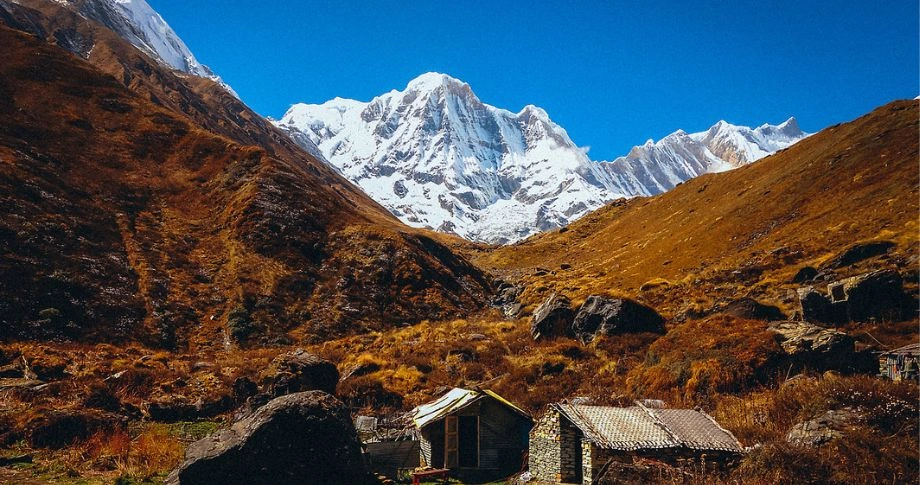
Mera Peak lies in the Khumbu region of eastern Nepal, south of Mount Everest and inside the Makalu Barun National Park.
Most expeditions begin with a short flight from Kathmandu to Lukla, followed by a trek through remote valleys, rhododendron forests, Sherpa villages, and high alpine terrain.
Quick Facts
Location
Khumbu, Nepal
Elevation
6,461 m / 21,197 ft
Peak Type
Trekking Peak
Typical Duration
16–18 Days
Best Seasons
Spring & Autumn
How Difficult Is Mera Peak Climbing?
This is the question we receive most often.
Difficulty : Moderate to Challenging
Mera Peak is physically demanding but not highly technical.
The biggest challenge is altitude, not rock climbing.
Difficulty Breakdown
Factor
Difficulty
Altitude
Very High
Technical climbing
Low to Moderate
Endurance required
High
Exposure
Moderate
Summit day
Very Challenging
What Makes It Challenging?
Long trekking days
Cold temperatures
Thin air above 5,000m
A summit day that can last 10–14 hours
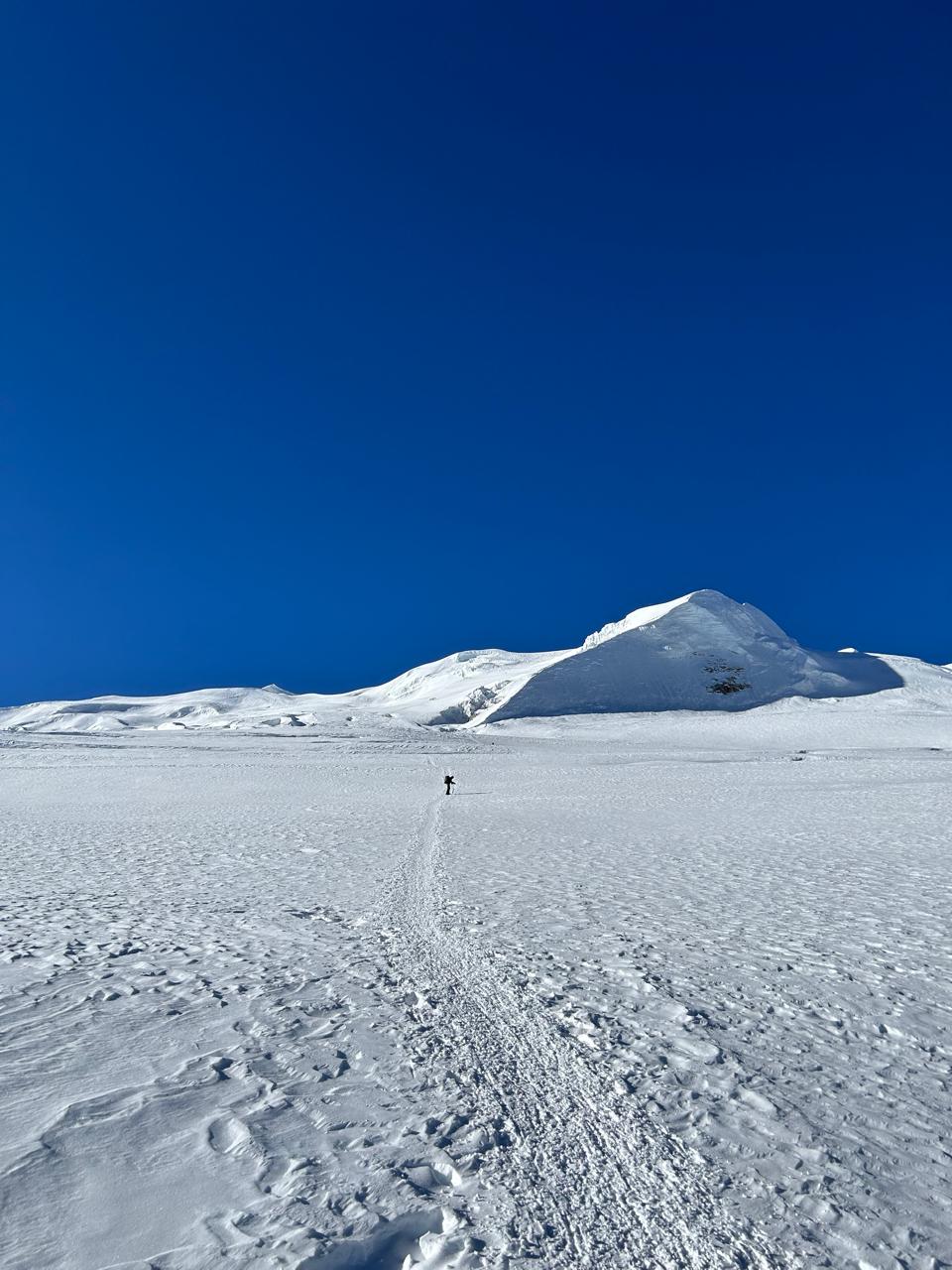
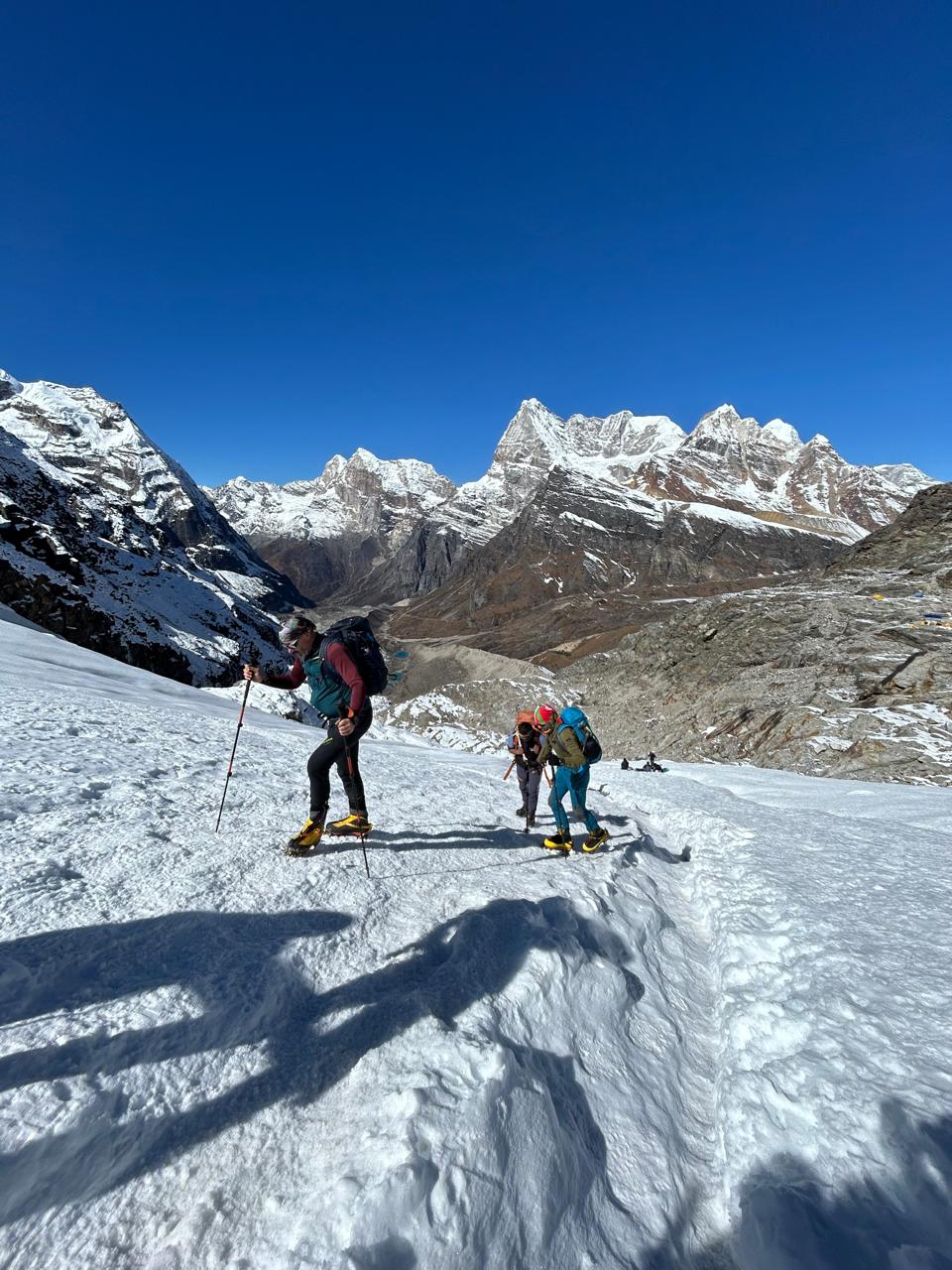
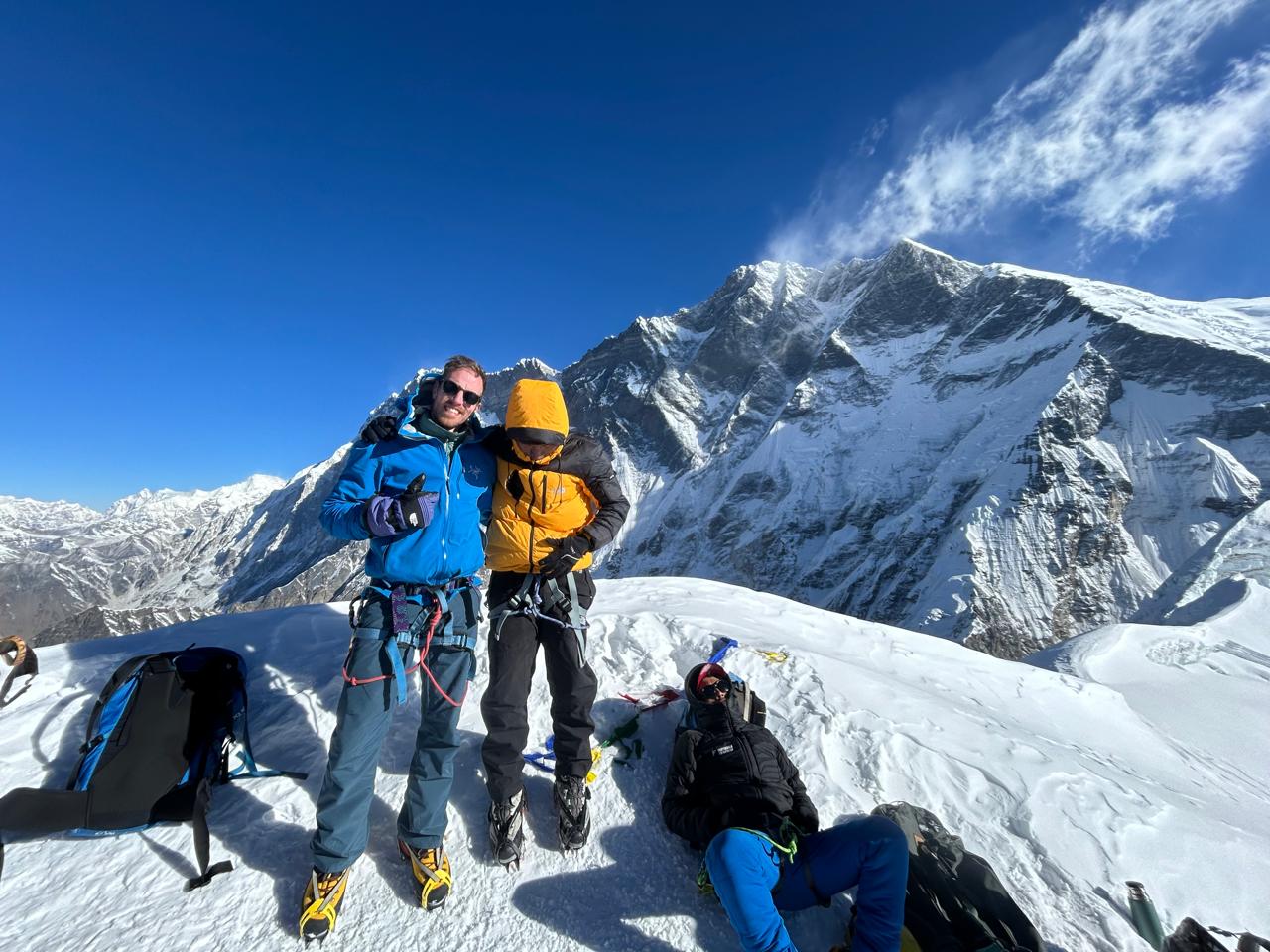
Walking on a glacier using crampons
Do You Need Technical Climbing Experience?
No. Most successful Mera Peak climbers are beginners.
Before the summit push, your guide will teach you:
How to use crampons
Walking with an ice axe
Rope travel on glaciers
Basic mountaineering safety
Who Is Mera Peak Best For?
Ideal Climbers
Great fit
Fit trekkers who have completed multi-day hikes
Everest Base Camp trekkers seeking a first summit
Adventure travelers wanting a 6,000m experience
Photographers and mountain lovers
Best Time for Mera Peak Climbing
Choosing the right season is one of the most important factors for a successful Mera Peak Climbing expedition. While the mountain is technically open throughout the year, weather conditions can vary dramatically, affecting trail conditions, visibility, and summit success.
From our experience guiding climbers in the Himalayas, spring (March to May) and autumn (September to November) consistently provide the safest conditions and the highest summit success rates.
These seasons offer stable weather, better visibility, moderate temperatures compared to winter, and well-established climbing routes.
Mera Peak Climbing in Spring (March – May)
Spring is widely regarded as the best season for Mera Peak.
As winter snow begins to melt, the trails become more accessible while the higher slopes remain covered in firm snow, creating excellent conditions for glacier travel. Temperatures gradually become milder, making trekking more comfortable.
One of the highlights of climbing during spring is the vibrant rhododendron forests at lower elevations. As you gain altitude, you'll enjoy crystal-clear views of Everest, Makalu, Lhotse, Cho Oyu, and countless surrounding peaks.
Advantages of Spring
Stable weather patterns
Comfortable daytime temperatures
Excellent mountain visibility
Colorful rhododendron forests
Higher summit success rates
Ideal snow conditions on the glacier
Things to Consider
Spring is the busiest climbing season. Flights to Lukla, teahouses, and climbing permits are in high demand, so booking several months in advance is recommended.
Mera Peak Climbing in Autumn (September – November)
Autumn is another outstanding season and is preferred by many experienced trekkers.
After the summer monsoon clears, dust and humidity disappear, leaving exceptionally crisp mountain views. The air is dry, skies are generally blue, and rainfall is minimal.
Temperatures are slightly cooler than spring, especially during summit attempts, but overall conditions remain highly favorable.
Advantages of Autumn
Crystal-clear mountain views
Dry and stable weather
Comfortable trekking temperatures
Lower chance of rainfall
Excellent photography conditions
Things to Consider
October is one of Nepal's busiest trekking months. Popular teahouses and domestic flights can fill quickly, making early reservations essential.
Climbing During Winter (December – February)
Winter climbs are possible but significantly more challenging.
Temperatures at high camps often fall below -25°C, and heavy snowfall can make trail-breaking slow and physically demanding. Strong winds near the summit may also force climbing teams to postpone or cancel summit attempts.
Winter expeditions are generally better suited to experienced mountaineers who are comfortable in extreme cold.
Pros
Very few trekkers
Peaceful trails
Spectacular snow-covered landscapes
Cons
Extreme cold
Heavy snowfall
Increased avalanche risk in some areas
Shorter daylight hours
Climbing During the Monsoon (June – August)
The summer monsoon is generally considered the least favorable season.
Lower sections of the trail become muddy and slippery, while clouds frequently obscure mountain views. Flight delays to Lukla are also more common due to poor weather.
Although the Hinku Valley lies in a partial rain shadow compared to other trekking regions, most climbers still avoid this season.
Which Season Do We Recommend?
At Himalayan Immersion Treks, we recommend:
First Choice: Spring (March–May)
Second Choice: Autumn (September–November)
These two seasons consistently provide the best combination of weather, safety, and summit success.
Weather on Mera Peak
Weather changes quickly in the Himalayas, especially above 5,000 meters.
Even during peak seasons, climbers should be prepared for:
Strong winds
Sudden snowfall
Rapid temperature changes
Intense UV exposure
Cold nights
Typical Temperatures
Elevation
Day
Night
Lukla
10°C to 20°C
2°C to 8°C
Khare
-2°C to 8°C
-10°C to -15°C
High Camp
-10°C to -5°C
-18°C to -25°C
Summit
-15°C to -25°C
Wind chill can feel much colder
The key to staying comfortable is dressing in layers, allowing you to adapt to changing conditions throughout the day.
How Fit Do You Need to Be?
A common misconception is that technical climbing ability is the biggest challenge on Mera Peak. In reality, cardiovascular endurance and stamina are far more important.
Expect to walk between 5 and 8 hours on most trekking days, with the summit day often lasting 10 to 14 hours.
You don't need to be an elite athlete, but you should be comfortable hiking for multiple consecutive days while carrying a small daypack.
Training for Mera Peak Climbing
The ideal preparation begins 3 to 4 months before your expedition.
A balanced training program should focus on endurance, leg strength, core stability, and recovery.
Cardio Training
Aim for 4–5 sessions per week, including:
Hiking with elevation gain
Trail running
Running
Cycling
Stair climbing
Swimming
Gradually increase the duration of your workouts to improve endurance.
Strength Training
Two to three sessions per week should include exercises such as:
Squats
Lunges
Step-ups
Deadlifts
Calf raises
Planks
Push-ups
Pull-ups
Strong legs and core muscles help maintain balance on uneven terrain and reduce fatigue during long trekking days.
Practice Hiking
Whenever possible, complete long hikes carrying a backpack weighing 8–10 kg.
This helps your body adapt to:
Continuous uphill walking
Descents
Backpack weight
Extended time on your feet
The more hiking experience you have before arriving in Nepal, the more enjoyable your climb will be.
Acclimatization: The Key to a Safe Summit
Altitude—not technical climbing—is the greatest challenge on Mera Peak.
As elevation increases, oxygen levels decrease significantly, making proper acclimatization essential.
Rushing to higher elevations greatly increases the risk of Acute Mountain Sickness (AMS) and other serious altitude-related illnesses.
For this reason, our itineraries are carefully designed with gradual elevation gain and dedicated acclimatization days.
How We Help You Acclimatize
At Himalayan Immersion Treks, our climbing itineraries follow the principle of "climb high, sleep low."
This means you'll often hike to a higher elevation during the day before returning to sleep at a lower altitude. This approach helps your body adapt more effectively to reduced oxygen levels.
Throughout the expedition, our experienced guides monitor each climber for early signs of altitude sickness and adjust the pace when necessary.
Tips to Reduce the Risk of Altitude Sickness
To improve your chances of a safe and successful climb:
Walk at a steady, comfortable pace.
Stay well hydrated throughout the trek.
Eat regular, carbohydrate-rich meals.
Avoid alcohol and smoking at high altitude.
Get adequate rest each night.
Inform your guide immediately if you experience symptoms such as headache, nausea, dizziness, or unusual fatigue.
Follow your guide's instructions at all times.
Remember, reaching the summit is optional—returning safely is always the priority.
Why Proper Preparation Matters
Mera Peak is often described as the ideal first Himalayan summit, but success depends on more than determination. Choosing the right season, arriving physically prepared, and following a well-paced acclimatization schedule dramatically improve both your safety and your enjoyment of the climb.
With expert local guidance, thoughtful planning, and respect for the altitude, Mera Peak becomes an achievable and unforgettable adventure for many first-time mountaineers.
Mera Peak Climbing Route
One of the reasons Mera Peak Climbing is so popular is the journey itself. The trail passes through some of the most remote and least crowded areas of the Everest region, offering a very different experience from the busy Everest Base Camp route.
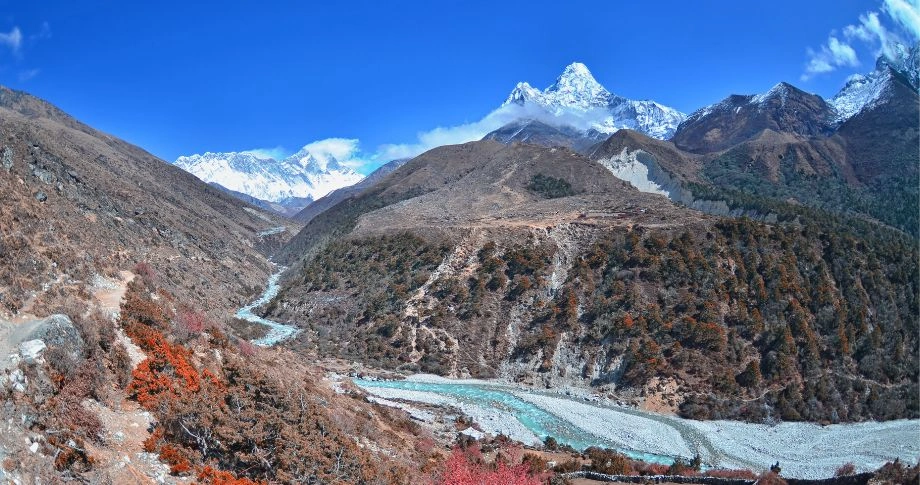
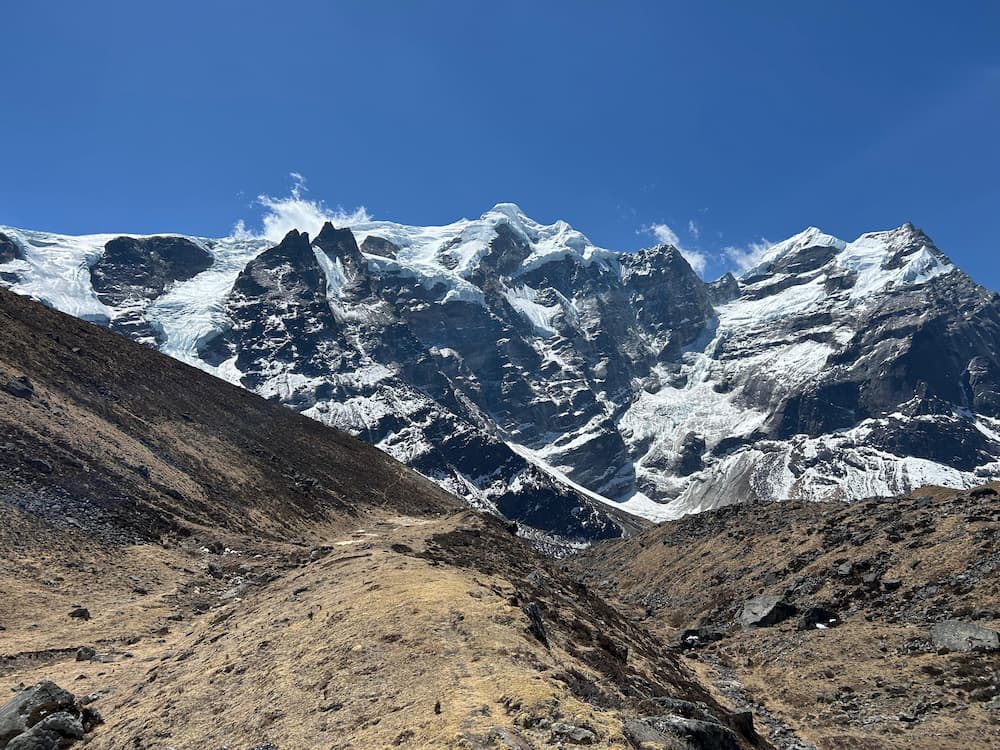
After a scenic mountain flight to Lukla, the trail heads south into the beautiful Hinku Valley, where you'll trek through dense forests, alpine meadows, traditional Sherpa villages, and high-altitude landscapes before reaching the glacier below Mera Peak.
Unlike Island Peak, which involves steep rock climbing near the summit, the Mera Peak route focuses on gradual altitude gain, making it an excellent choice for climbers attempting their first Himalayan peak.
Along the way, you'll witness dramatic scenery, abundant wildlife, and spectacular views of some of the world's highest mountains.
Since Mera Peak lies within Makalu Barun National Park, every climber must obtain this permit before entering the conservation area.
Do We Arrange the Permits?
Yes.
When you book your expedition with Himalayan Immersion Treks, our team arranges all required climbing and trekking permits before your adventure begins, allowing you to focus entirely on preparing for your climb.
How Much Does Mera Peak Climbing Cost?
The cost of Mera Peak Climbing depends on several factors, including the duration of the expedition, group size, level of service, guide experience, and what is included in the package.
A professionally organized expedition generally offers much better value than choosing the cheapest option. Experienced guides, proper acclimatization, quality equipment, and strong logistical support can make a significant difference to both your safety and your overall experience.
When comparing operators, don't focus only on the headline price. Always check what is included, such as permits, domestic flights, accommodation, meals, climbing gear, and emergency support.
Looking for a complete price breakdown and what you should pack for this trek? Visit our Mera Peak Climbing – 17 Days package page to see current pricing, inclusions, exclusions, and available departure dates.
Is Mera Peak Safe?
Mera Peak has one of the highest success rates among Nepal's trekking peaks, but like any high-altitude expedition, it carries inherent risks.
The primary hazards are:
Altitude sickness
Extreme weather
Cold temperatures
Glacier travel
Fatigue
The good news is that these risks can be significantly reduced through proper planning, gradual acclimatization, and experienced leadership.
At Himalayan Immersion Treks, safety is always our top priority. Our expeditions are led by experienced climbing guides who monitor every participant throughout the journey.
We believe that reaching the summit is only meaningful if everyone returns safely.
Do You Need Travel Insurance?
Yes.
Comprehensive travel insurance is essential for Mera Peak Climbing.
Your policy should include:
High-altitude trekking and climbing (up to at least 6,500 meters)
Emergency helicopter evacuation
Medical treatment
Trip cancellation
Personal accident coverage
Lost or delayed baggage
Before booking, always confirm that your insurance specifically covers trekking peaks in Nepal.
Mera Peak vs Island Peak vs Lobuche East
Choosing the right peak depends on your experience, fitness, and climbing goals.
Feature
Mera Peak
Island Peak
Lobuche East
Elevation
6,476 m
6,189 m
6,119 m
Technical Difficulty
Moderate
Moderate to High
High
Best For
First 6,000 m peak
Climbers with basic technical skills
Experienced mountaineers
Glacier Travel
Yes
Yes
Yes
Steep Fixed Ropes
Minimal
Yes
Extensive
Physical Challenge
High
High
Very High
If your goal is to experience a Himalayan summit for the first time, Mera Peak is often the most suitable choice thanks to its gradual approach and relatively straightforward climbing route.
A successful expedition depends on much more than reaching the summit. The people who guide you, the pace of the itinerary, and the quality of the support all shape your experience in the mountains.
At Himalayan Immersion Treks, we believe every climb should be safe, well-organized, and genuinely memorable.
When you join us, you can expect:
Experienced, licensed local climbing guides
Carefully planned itineraries with proper acclimatization
Small group departures for a more personal experience
High safety standards throughout the expedition
Reliable logistics from arrival to departure
Honest advice before and during your climb
Friendly support from a passionate local team
Our mission is not simply to take you to the summit—we want you to experience the Himalayas with confidence, respect, and unforgettable memories.
Frequently Asked Questions
Can beginners climb Mera Peak?
Yes. Mera Peak is widely considered the most beginner-friendly trekking peak above 6,000 meters in Nepal. While it is physically demanding, it requires less technical climbing than many other Himalayan peaks.
How difficult is Mera Peak Climbing?
The biggest challenge is the altitude rather than technical climbing. With good fitness, proper acclimatization, and experienced guides, many first-time climbers successfully reach the summit.
How long does Mera Peak Climbing take?
Most expeditions last between 16 and 18 days, including arrival, acclimatization, the summit attempt, and contingency time for weather.
What is the best month to climb Mera Peak?
April, May, October, and early November generally offer the most stable weather and the highest chances of a successful summit.
Do I need previous mountaineering experience?
No. Previous trekking experience is highly recommended, but many climbers learn the necessary mountaineering skills during the pre-summit training at Khare.
What mountains can you see from the summit?
On a clear day, the summit offers spectacular views of Everest, Lhotse, Makalu, Cho Oyu, Kanchenjunga, Baruntse, Chamlang, and numerous other Himalayan peaks.
Can I rent climbing equipment in Nepal?
Yes. Most technical climbing equipment can be rented in Kathmandu or arranged through Himalayan Immersion Treks.
How cold does it get on Mera Peak?
Temperatures at High Camp and on summit day often fall between -15°C and -25°C, with wind chill making it feel even colder.
Final Thoughts
Mera Peak is much more than Nepal's highest trekking peak. It is a journey through remote valleys, authentic Sherpa culture, and breathtaking Himalayan landscapes that culminates in one of the finest summit panoramas in the world.
For many climbers, it is the first step into high-altitude mountaineering. With the right preparation, a realistic training plan, and experienced local support, Mera Peak is an achievable goal that rewards every effort.
Whether you're looking to challenge yourself, prepare for bigger expeditions, or simply experience the Himalayas from above 6,000 meters, Mera Peak offers an adventure you'll remember for a lifetime.
If you're ready to start planning your climb, explore our Mera Peak Climbing – 17 Days package for detailed itineraries, current pricing, departure dates, and booking information.
Show All Comments
Leave a Reply
By using form u agree with the message sorage, you can contact us
directly now



Show All Comments