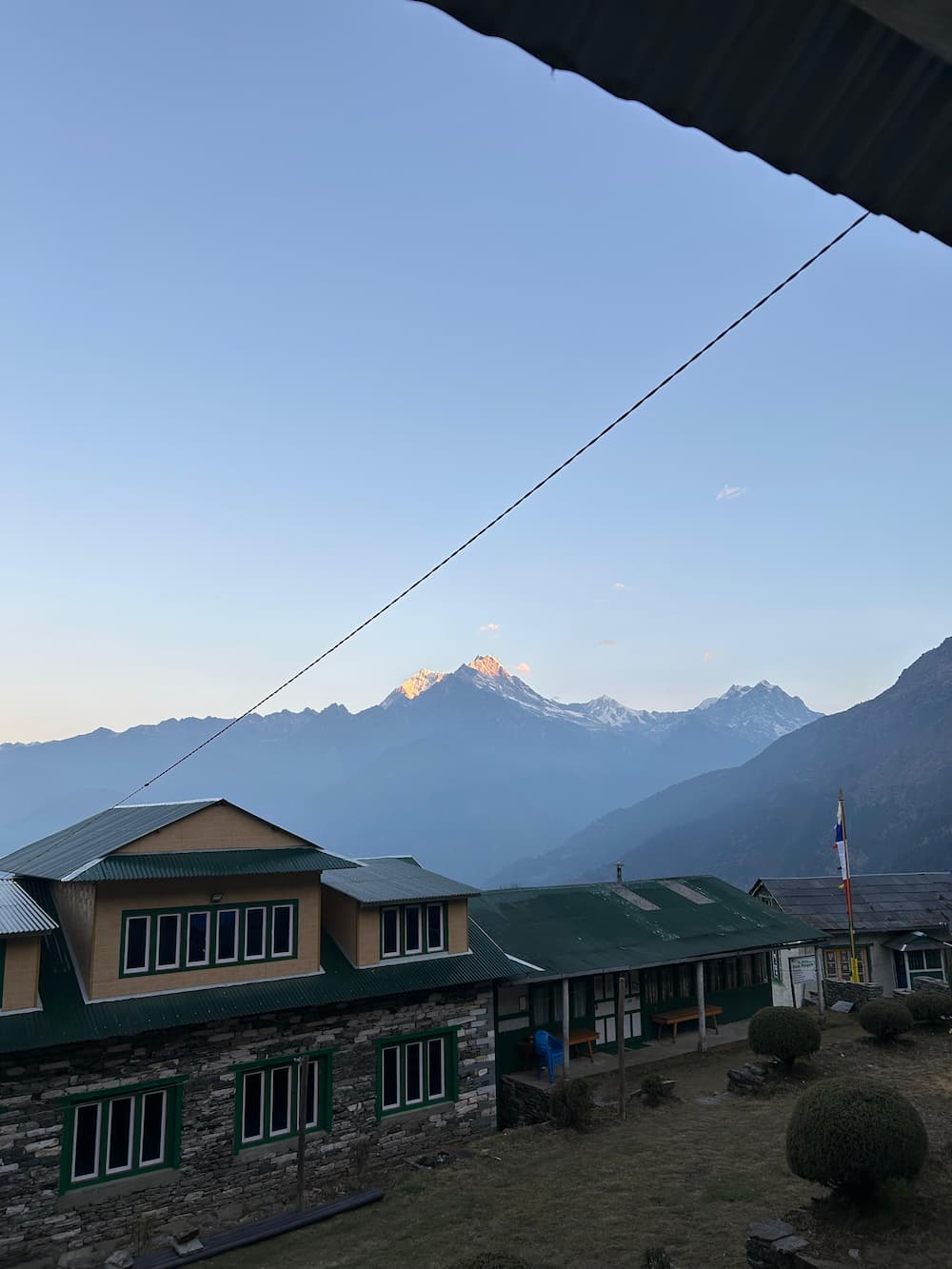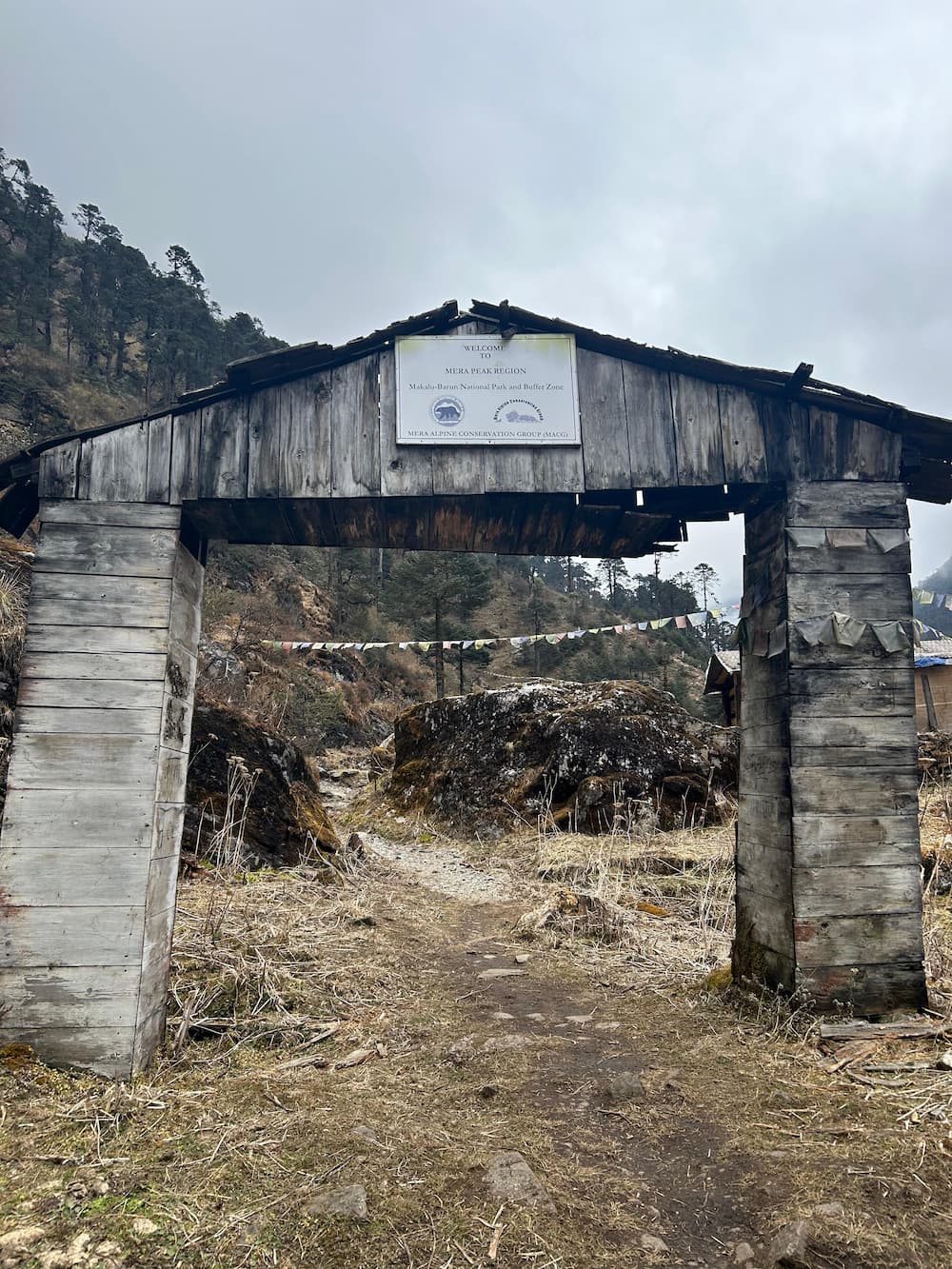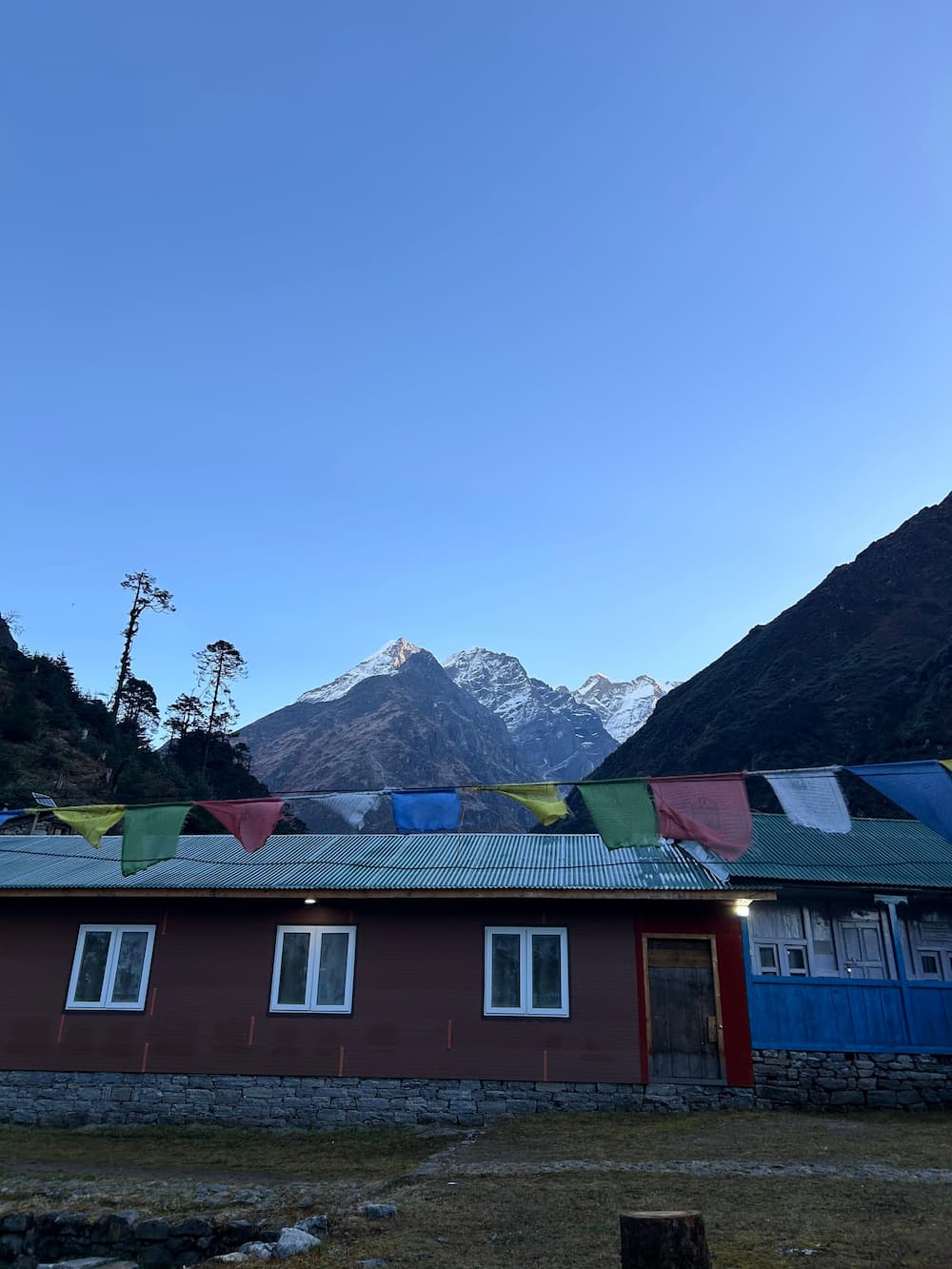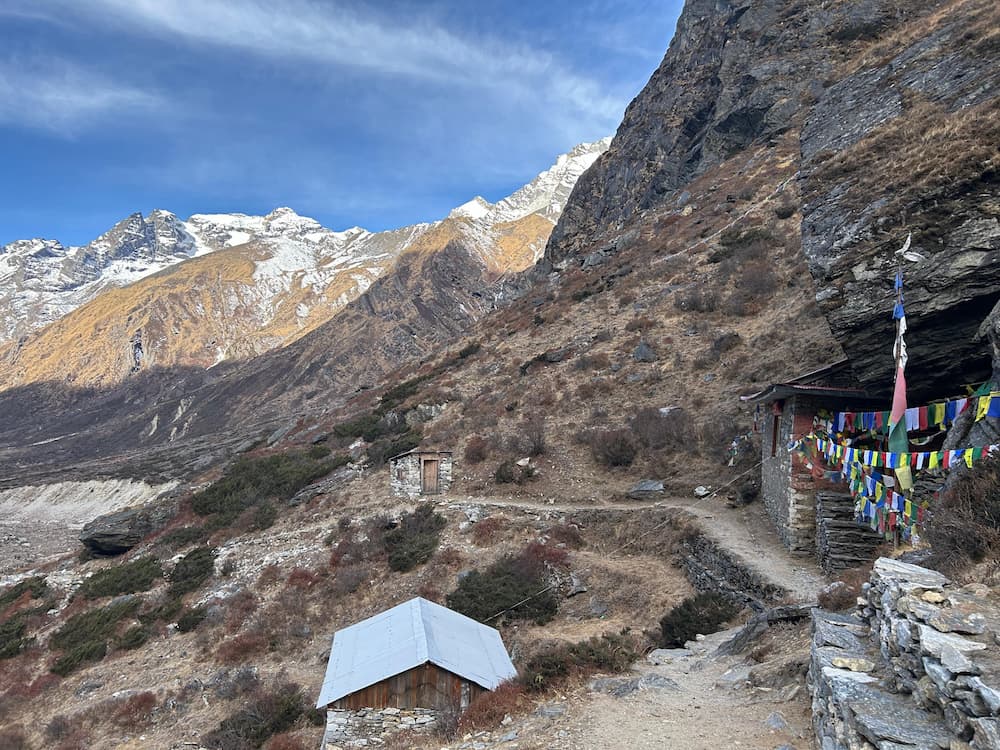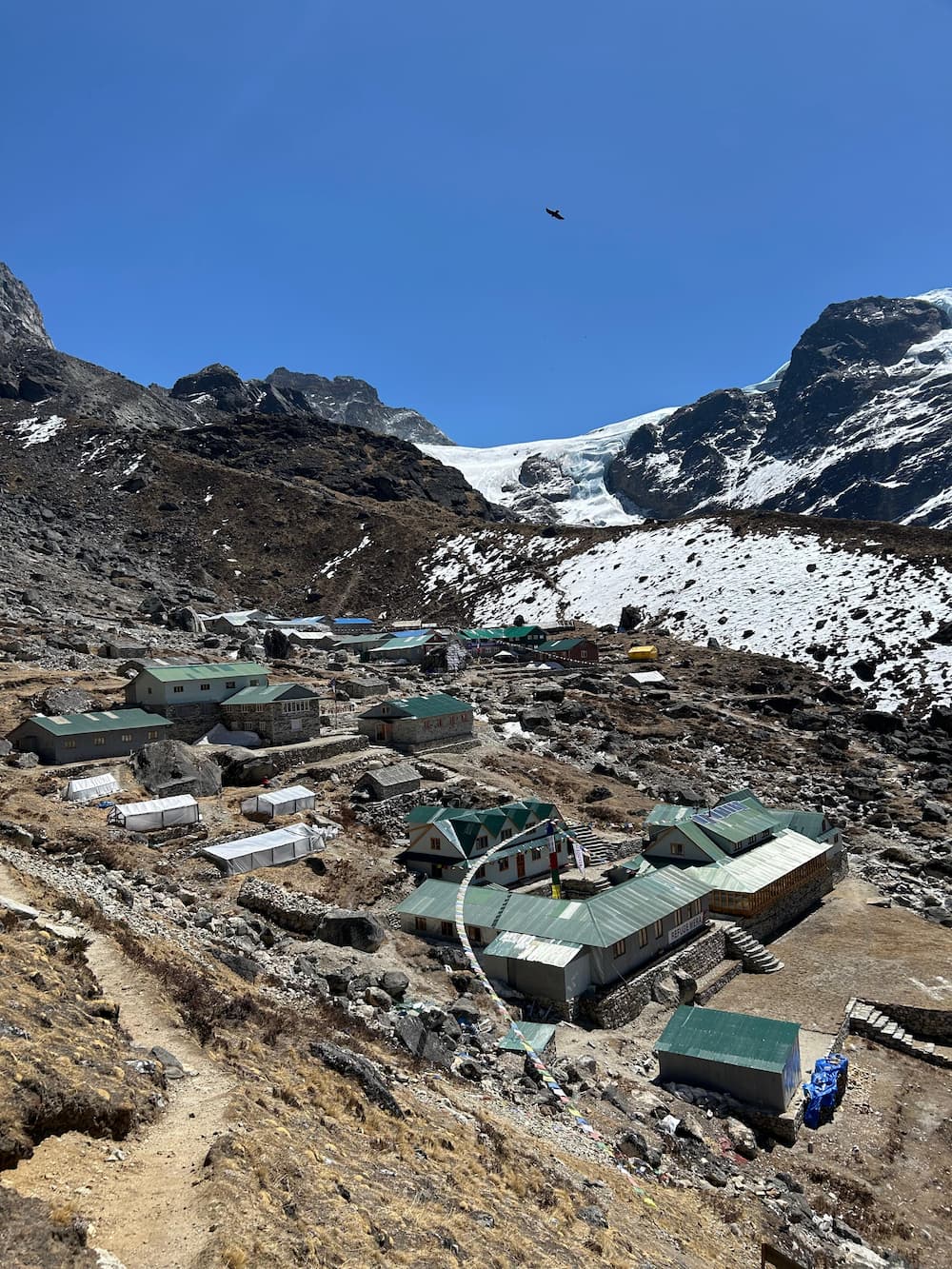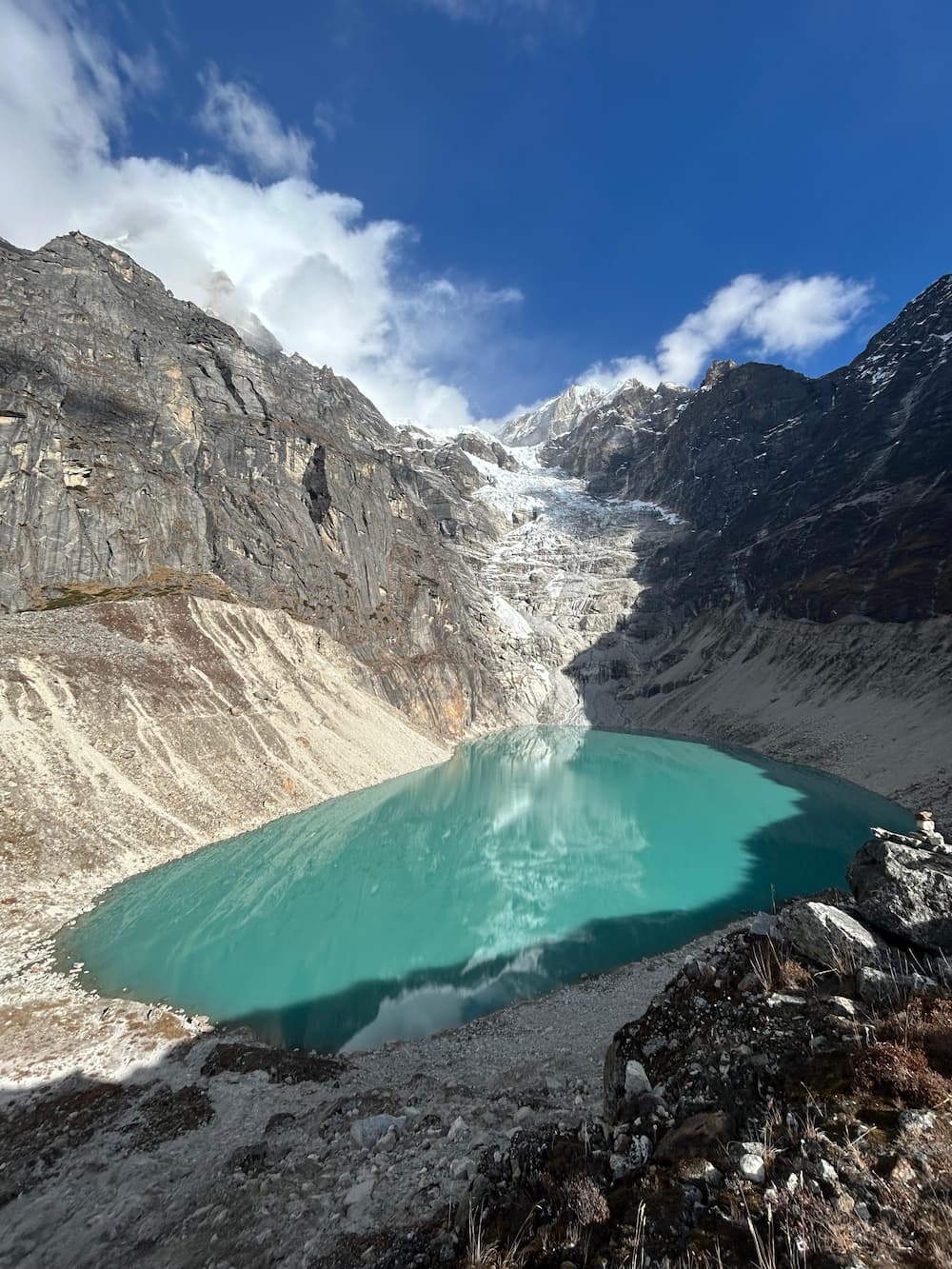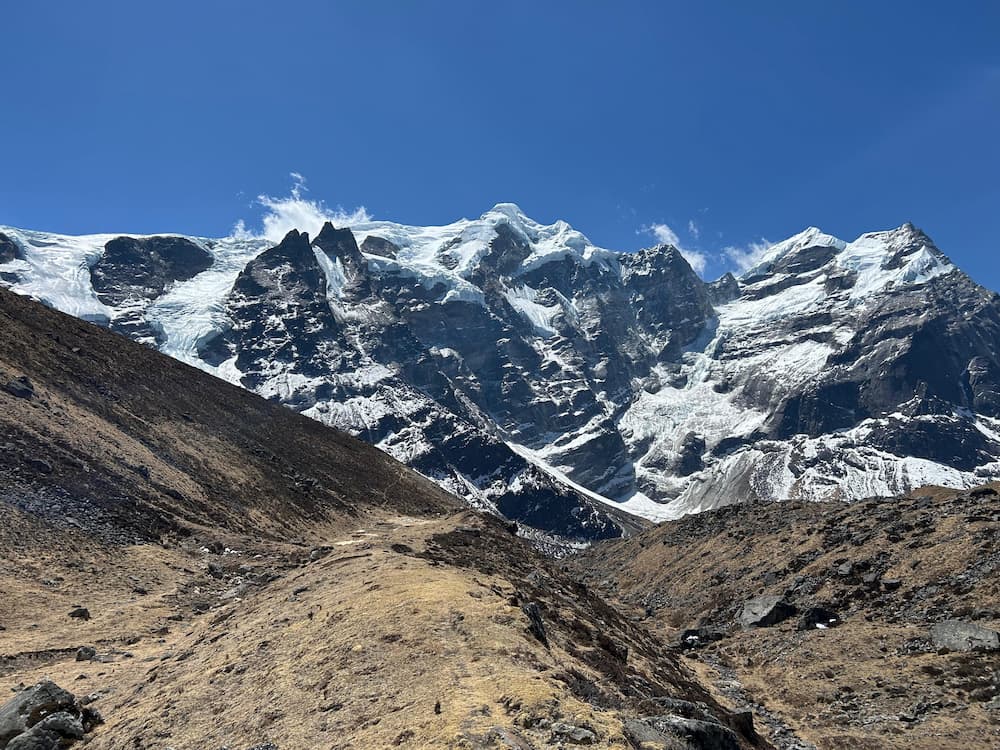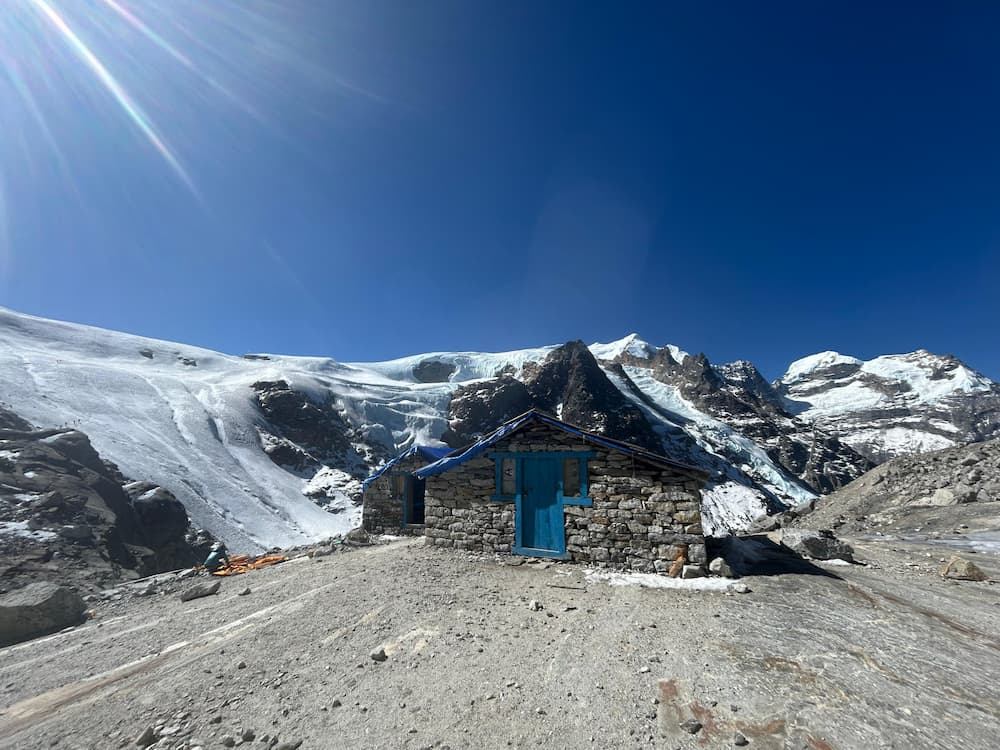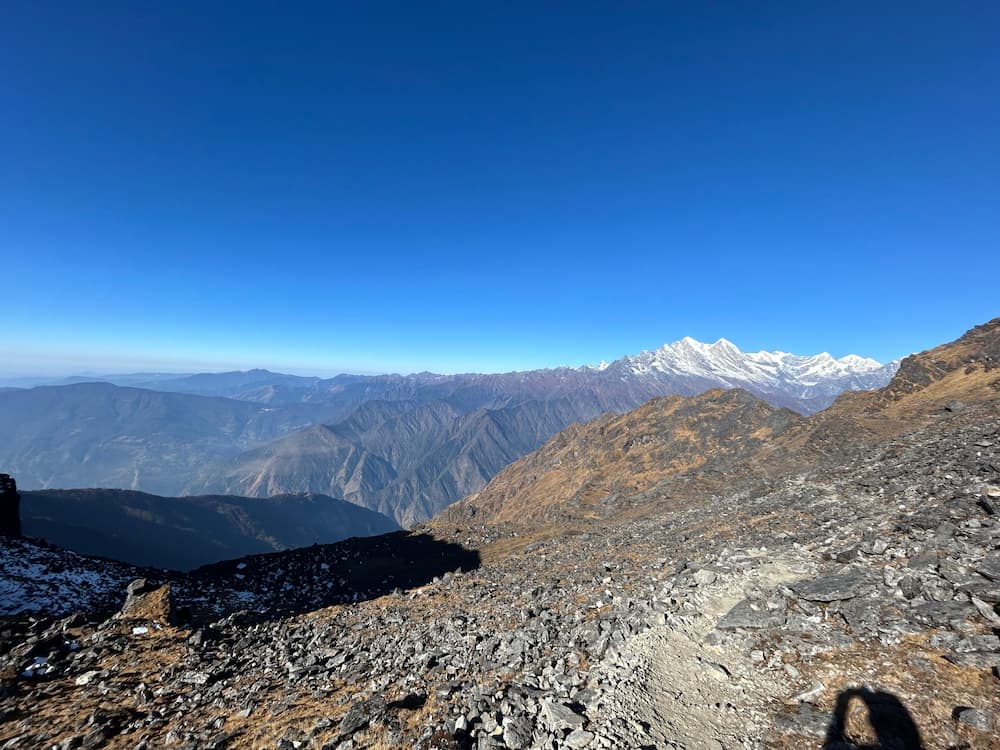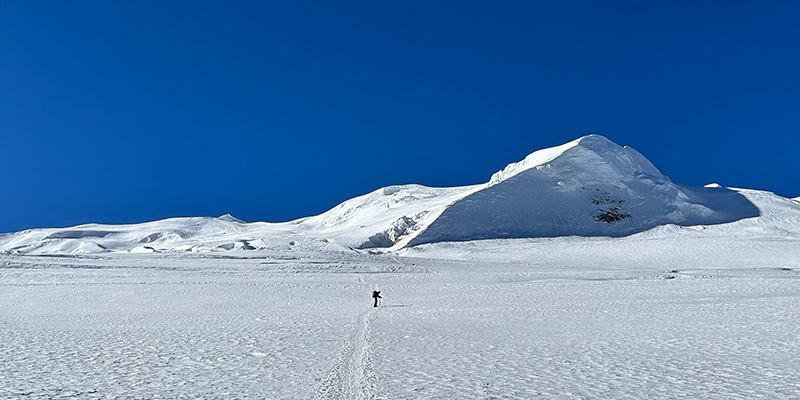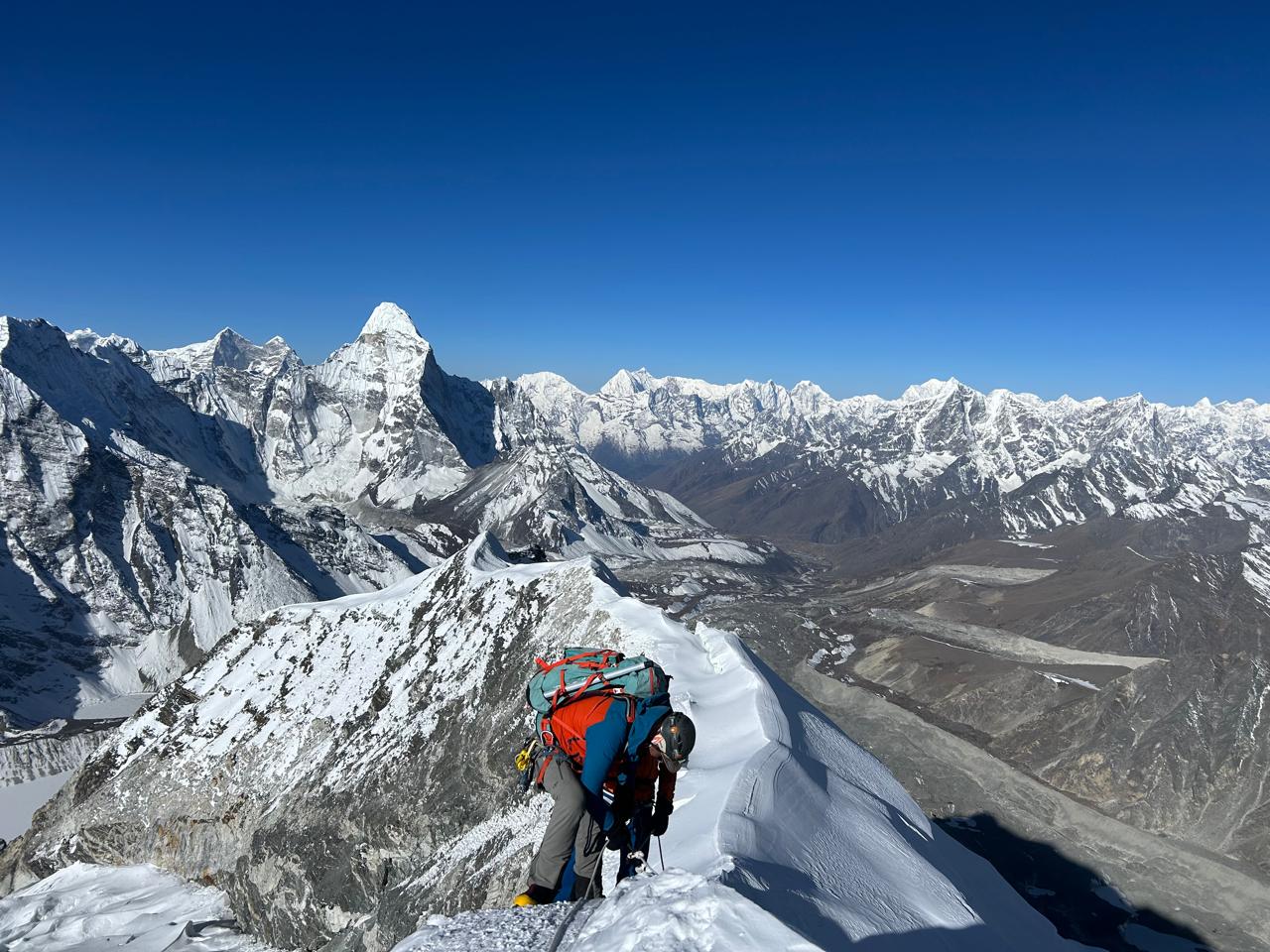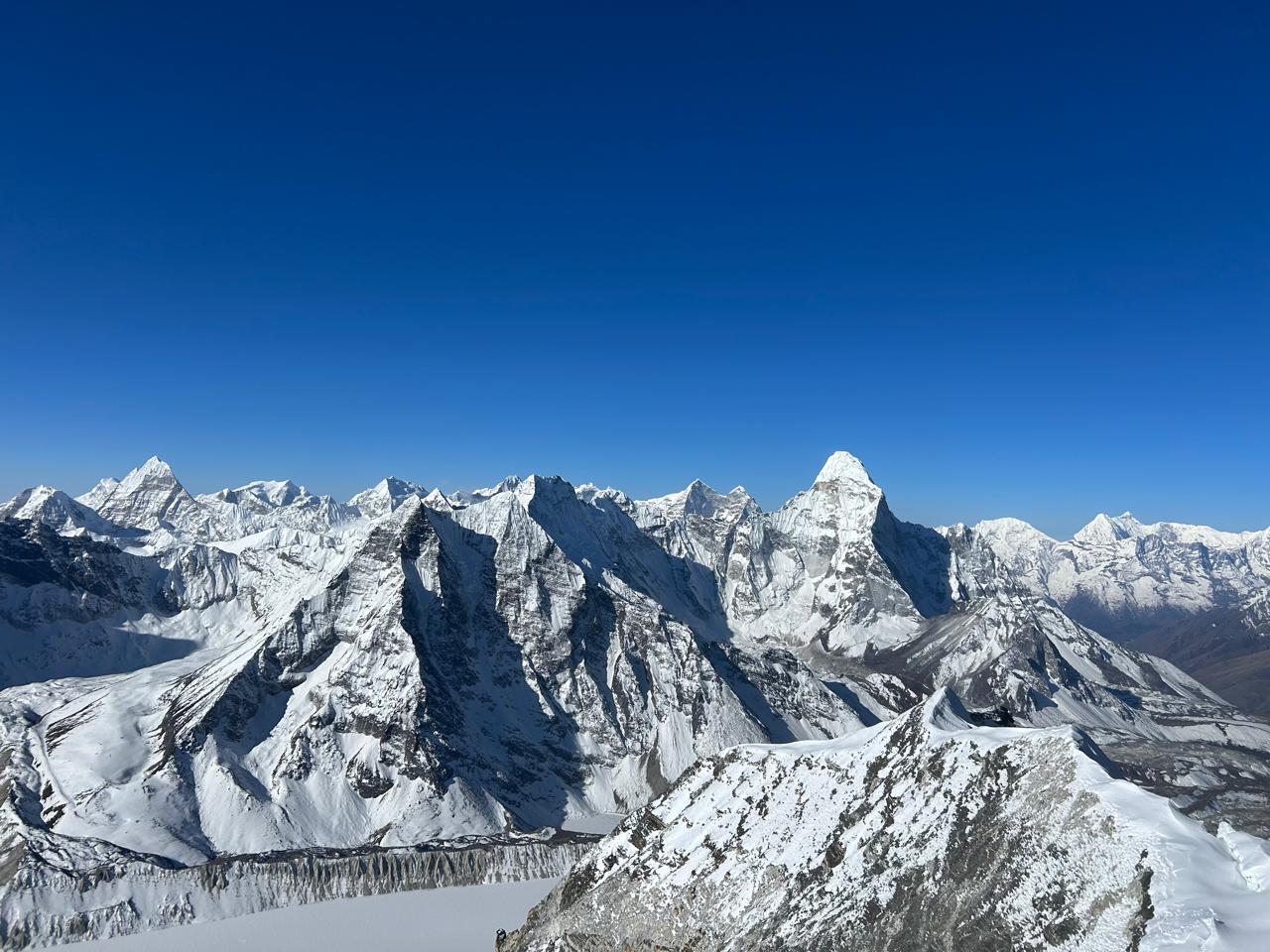
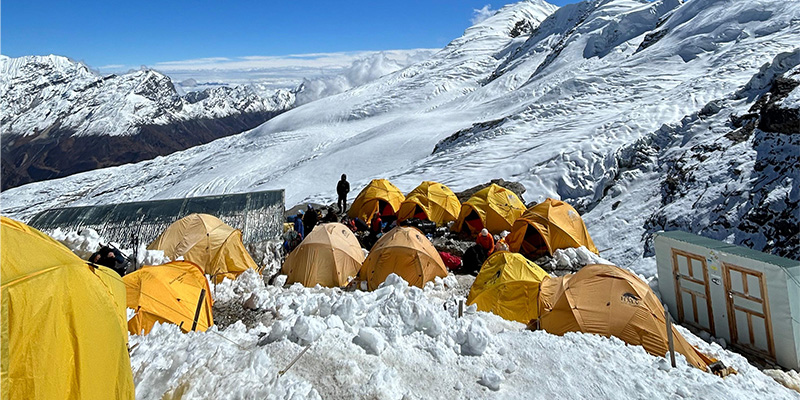
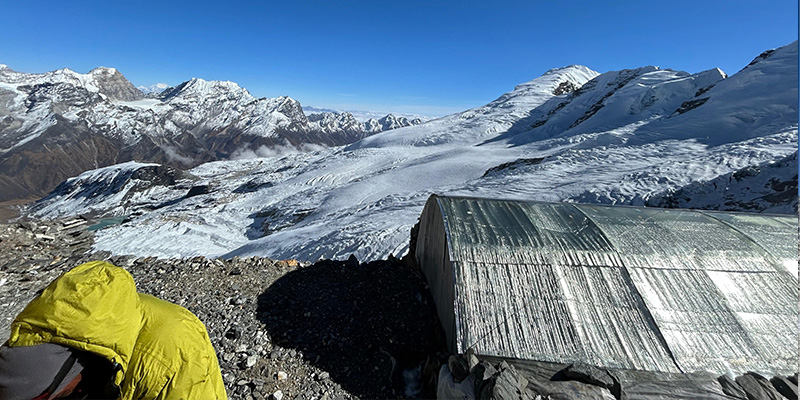
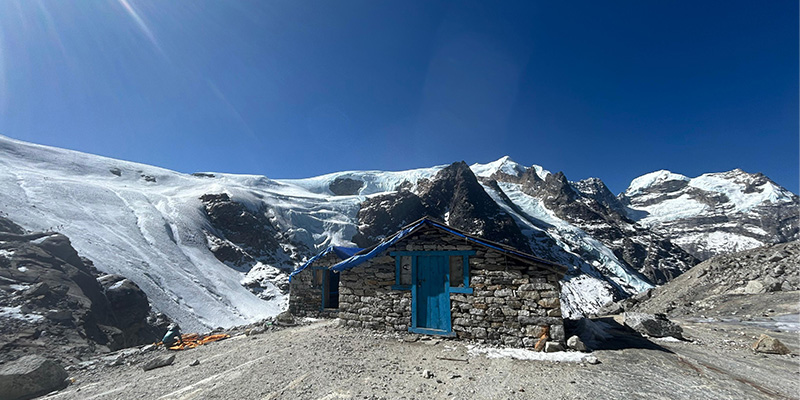
Mera Peak Climbing is the perfect introduction to Himalayan mountaineering, offering an epic adventure that doesn’t require technical climbing experience but rewards you with jaw-dropping panoramas and a deep sense of achievement. At 6,461 meters (21,198 ft), Mera Peak is Nepal’s highest trekking peak, standing tall in the remote Solu Khumbu region, just south of Everest.
With proper acclimatization and support, this expedition becomes a physically demanding but achievable goal for fit trekkers. Along the way, you’ll walk through ancient forests, yak pastures, glacial rivers, and high alpine terrain — all while immersing yourself in the rhythms of Sherpa culture.
Route & Terrain:
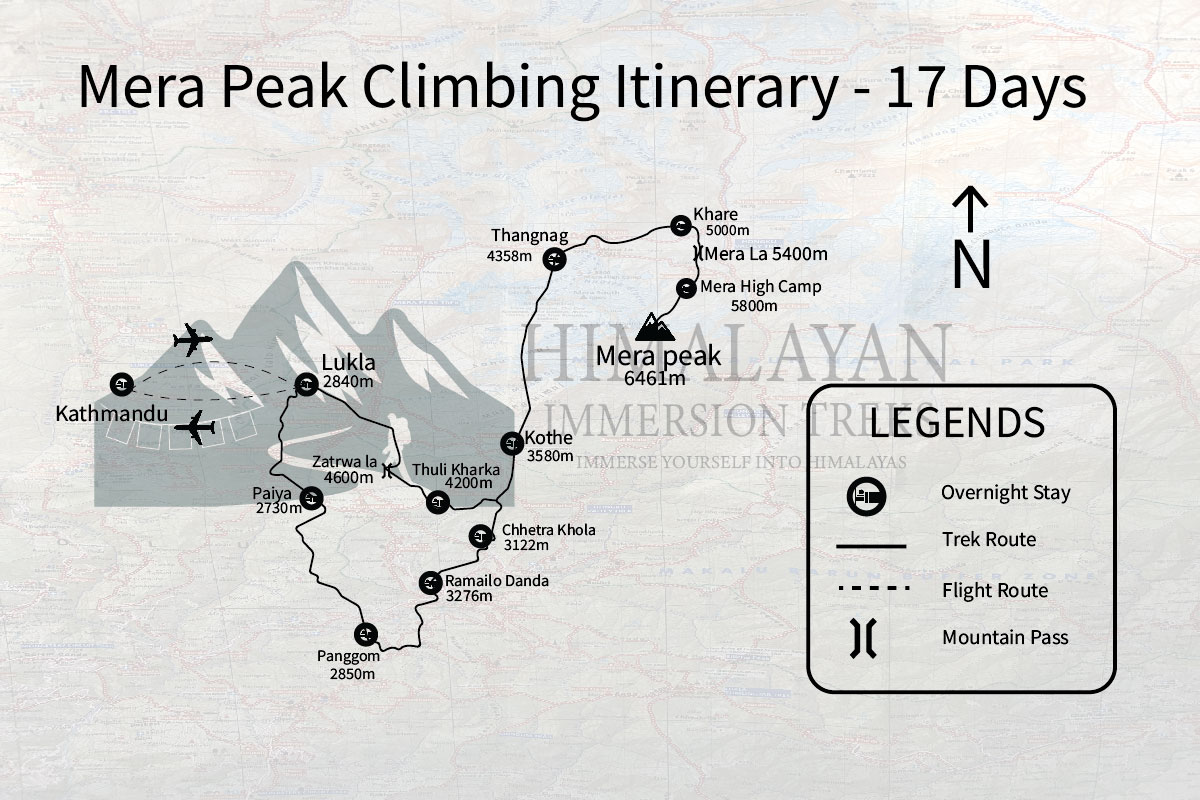
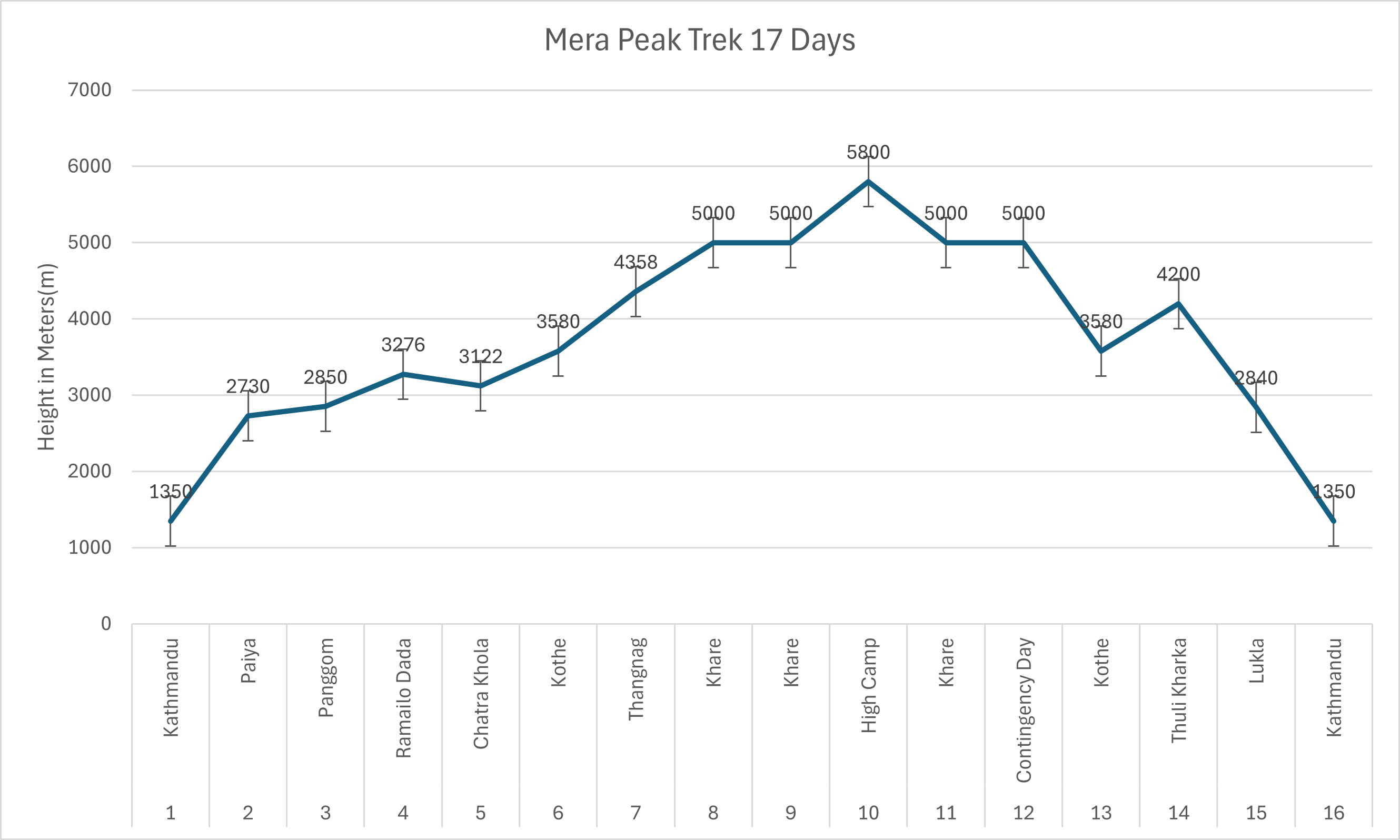
Your journey begins with a scenic flight to Lukla, from where you trek through Paiya,Panggom and Kothe to reach Khare, your base before the summit attempt. This trail winds through the Hinku Valley, one of the most isolated yet stunning regions in the Khumbu.
Before summiting, we conduct a pre-climb training session at Khare. You’ll learn how to use climbing gear like harnesses, ice axes, crampons, and fixed ropes. The summit day is long and starts early — but the reward is extraordinary: 360-degree views of Everest, Lhotse, Makalu, Cho Oyu, and Kanchenjunga under the sunrise sky.
Mera Peak Climbing Difficulty:
Mera Peak involves high-altitude walking on snow and ice, with a steady climb up a glacier. Although not highly technical, it demands good physical fitness and mental endurance. Prior trekking experience and some basic rope or crampon training (provided during the trek) are sufficient.
Accommodation & Support:
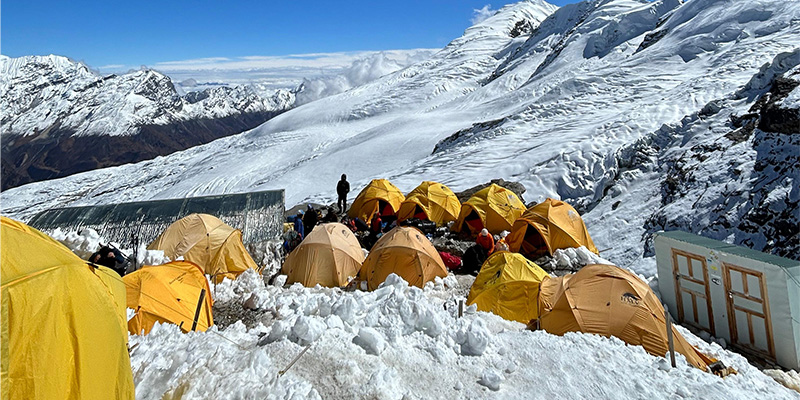
You’ll stay in cozy teahouses along the lower trail and tents at high camp. Our experienced guides, porters, and kitchen staff will handle logistics, food, and safety. We use quality mountaineering gear and have contingency plans for weather delays or altitude-related issues.
Best Season for climbing Mera Peak:
Spring (March–May): Stable weather, blooming rhododendrons, longer days
Autumn (Sept–Nov): Crystal-clear mountain views, dry conditions, popular for summit success
Why Climb with Himalayan Immersion Treks?
At Himalayan Immersion Treks, we specialize in small group expeditions with personalized service. Our climbing guides are NMA-certified and deeply familiar with the Mera region. Safety, acclimatization, and authentic experience are at the core of what we offer.
What to Pack for Mera Peak Climbing
Here’s a complete packing list to ensure you're fully prepared for the Mera Peak adventure. Most gear can be rented or bought in Kathmandu, but quality items are recommended for comfort and safety.
Clothing
Base Layers
2 moisture-wicking T-shirts (synthetic or merino)
2 thermal tops & bottoms (midweight or heavyweight)
Insulation Layers
Fleece or softshell jacket
Down jacket (heavyweight, -15°C to -25°C rated)
Outer Layers
Waterproof breathable jacket (Gore-Tex or similar)
Waterproof trousers (Gore-Tex or similar)
Windproof pants
Trekking Clothes
2–3 trekking pants
3–4 moisture-wicking socks
1 pair of gaiters (for snow and mud)
2–3 pairs of underwear
Gloves
Inner gloves (thin liner)
Insulated gloves or mittens (warm and waterproof)
Headwear
Warm wool or fleece hat
Sun hat or cap
Buff or neck gaiter
UV-protection sunglasses (Category 4 for glacier)
Footwear
High-altitude mountaineering boots (double boots like La Sportiva G2, Scarpa Phantom, etc.)
Lightweight trekking shoes or boots
Camp sandals or slippers (for teahouse use)
Crampon-compatible boots are mandatory
Climbing Gear (Provided by us, but bring your own if you prefer quality fit)
Harness
Helmet
Ice axe
Crampons
Carabiners
Climbing rope (group gear)
Jumar (ascender) and belay device
Personal Items
Sunscreen (SPF 60+)
Lip balm (SPF)
Personal toiletries & small towel
Wet wipes, hand sanitizer
Water purification tablets or filter
Quick-dry travel towel
Sleeping
Sleeping bag (rated to -15°C or below)
Sleeping bag liner (optional, for hygiene and warmth)
Foam or inflatable sleeping mat (optional at high camp)
Accessories
Headlamp with extra batteries
Trekking poles
Water bottles (2L total) or hydration bladder
Dry bags or waterproof packing cubes
Power bank or solar charger
Documents & Essentials
Valid passport & 2 passport-size photos
Insurance papers (including emergency evacuation)
Cash (for tips, snacks, charging, Wi-Fi)
Travel and itinerary copy